
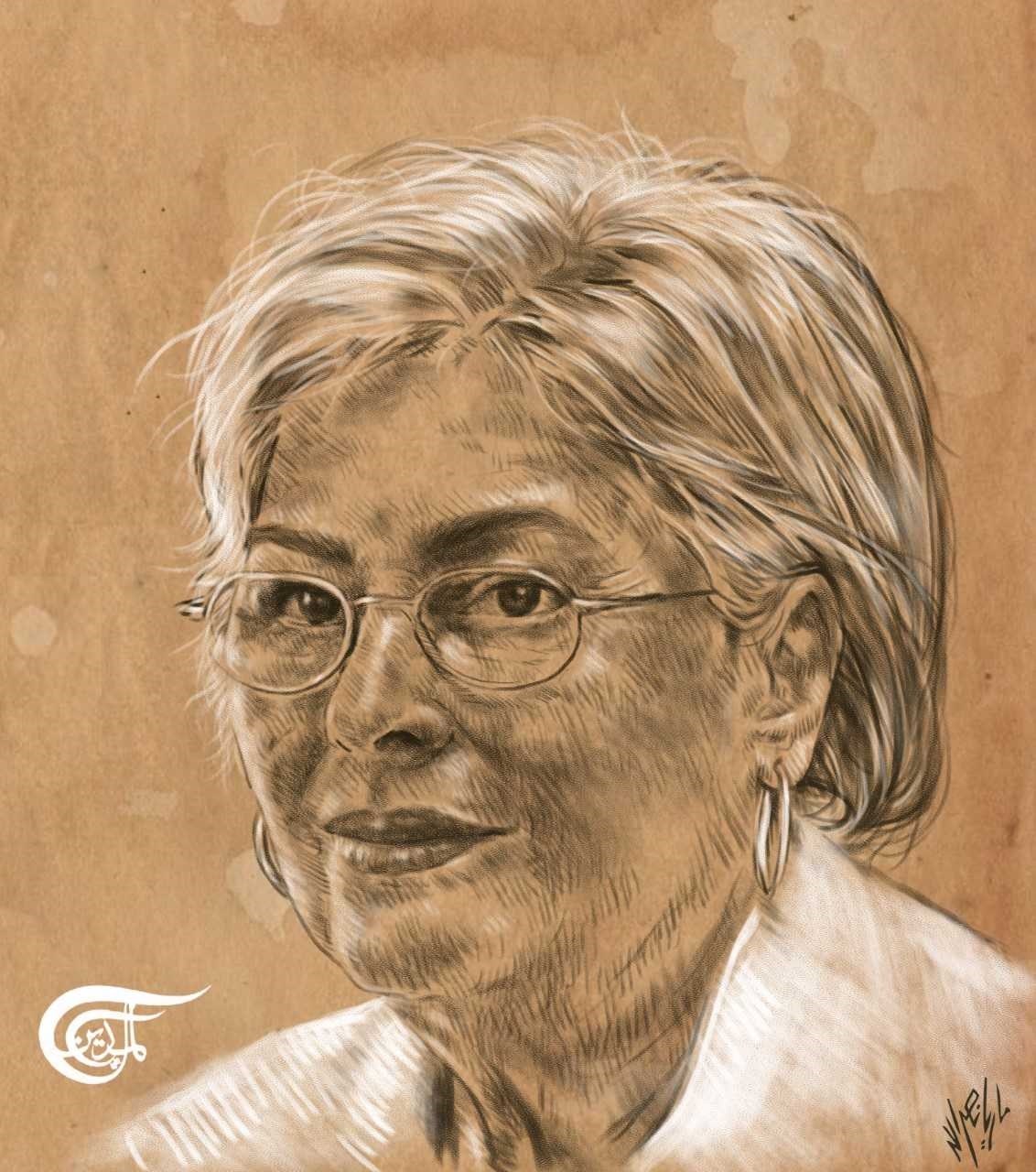
Beyond the Battle: Radwa Ashour on Illness, Creativity, and Resistance
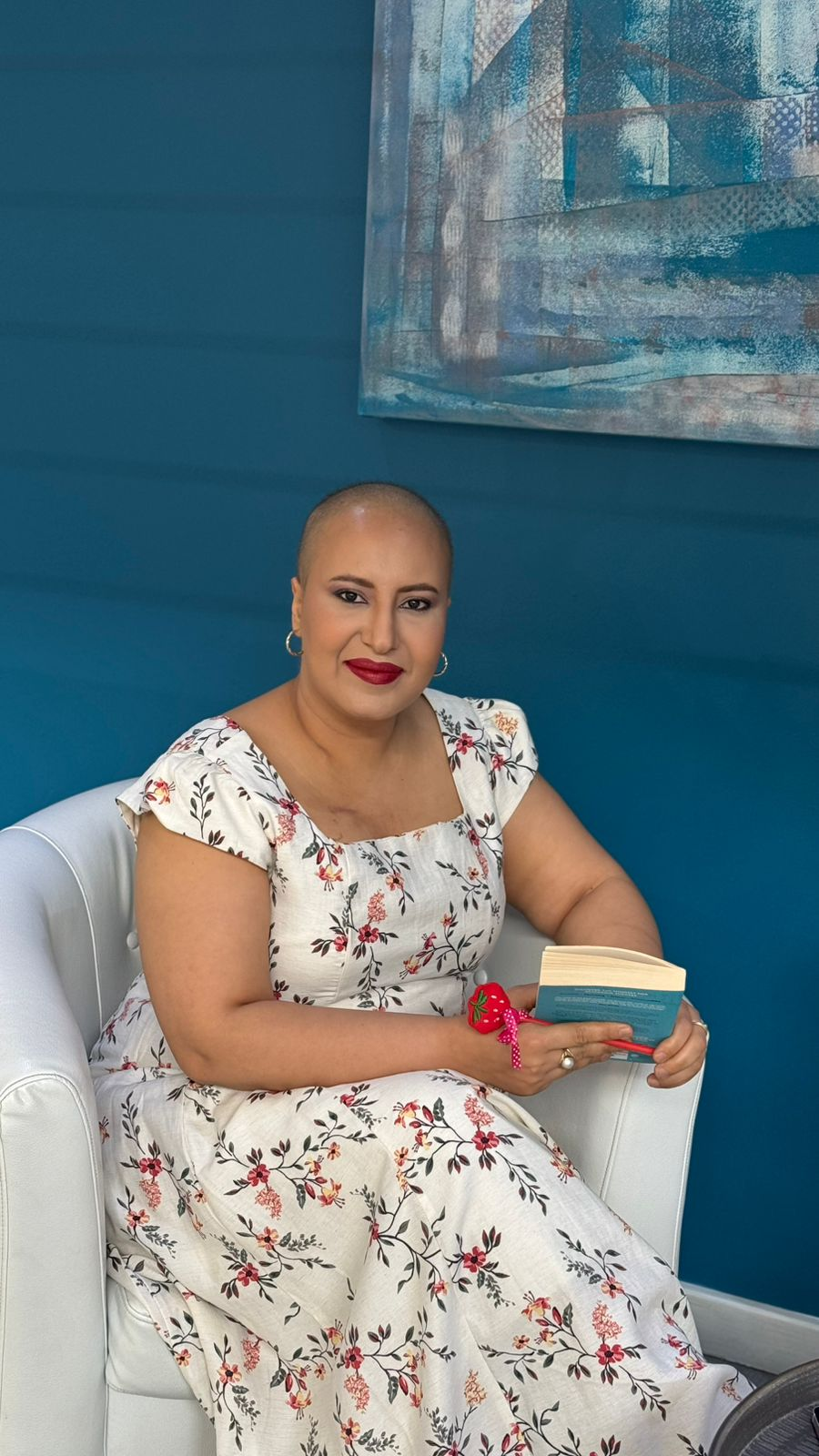
Illness, creativity, and resistance are often treated as separate themes. In the life and work of Egyptian writer Radwa Ashour, they become one story: a woman who refused to be reduced to her disease, who wrote through cancer with honesty and fire, and whose example still speaks powerfully to women living with cancer in North Africa today.
A Life That Refused to Be Small
Radwa Ashour was born in Cairo in 1946. She studied Arabic literature, then pursued her doctorate in the United States, writing a groundbreaking thesis on African American literature. She returned to Egypt and taught for decades at Cairo University, where former students still remember her not only as a brilliant scholar, but as a teacher who changed lives.
Her fiction refused to be small. In her most famous work, the Granada Trilogy, she tells the story of the fall of Muslim Spain — the loss of Andalusia in 1492 — through the eyes of a family living through that catastrophe. It is a novel about displacement and erasure, about what survives when everything seems to be taken, about the stubbornness of culture and memory when power tries to wipe them out.
Her personal life was intertwined with struggle and exile. She was married to Palestinian poet Mourid Barghouti, and so her daily reality was woven into the ongoing story of Palestine: loss of homeland, exile, occupation. She wrote about these pressures without sentimentalism, but also without despair. Her tone was clear, honest, and fiercely humane.
Then came illness. And she wrote about that too.
Writing Illness From the Inside
Radwa Ashour’s long struggle with cancer is documented with extraordinary honesty in her autobiographical book Athqal min Radwa (“Heavier than Radwa”) and in her final work Al-Sarkha (“The Scream”). These texts do not treat illness as an abstract metaphor. They record its psychological and physical weight from the inside, with rare clarity and transparency.
In one hospital scene, she distills the experience into a single devastating insight: “The cruelest thing about illness is the breaking of pride.” She describes the moment when the call bell slips from her hand, falls to the floor, and she cannot reach it. It is a small incident, but it exposes the depth of enforced dependence and loss of control that serious illness imposes on the body and the self.
In another passage, she recalls how the touch of a simple white cotton dress brought her unexpected calm. Putting on that dress, she feels as if it has brought her mother back to her, breaking the estrangement of the hospital room. A piece of fabric becomes a bridge between sterile medical space and the warmth of memory, between isolation and human presence.
She also writes about how illness unsettles confidence. Cancer, she notes, can make you fear that you are no longer capable, that you will not be able to go on — that the disease will steal from you the very tools that define your life: reading and writing. Here, she is not romanticizing pain; she is naming the quiet terror that accompanies the possibility of losing your own voice.
What is remarkable is not simply that she continued writing while sick — many writers do. What stands out is the quality of that writing: the refusal to soften illness into poetry, to dress suffering in heroic language that makes it easier to consume. Instead, she insists on looking at what illness actually costs, and at what it does not have the power to take.
Her work teaches us that illness is not a story about weakness or strength; it is a human experience, complex and costly, survivable through honesty rather than performance.
Rethinking Resistance
“Resistance” is a word that appears often in stories about illness, but it is used in very different ways.
The first is the language of battle. We see it on awareness posters and in survivor narratives: “She fought bravely.” “She was a warrior.” “She never gave up.” This framing casts cancer as an enemy and the patient as a soldier. It can be motivating for some, but it carries a hidden cruelty. If survival is framed as a test of courage and willpower, what does that imply about the women who die? Or those who are afraid, who grieve, who break down, who have bad days? It suggests that they have failed the test. That is not resistance. That is performance, imposed from the outside.
Radwa Ashour’s resistance looked very different. It was the refusal to be reduced to the disease. It was the insistence that suffering would not be the whole story. She continued to think, to write, to teach, to love, to argue, to remain curious about the world. Not because she was “fighting” cancer in the warrior sense, but because she insisted on remaining fully herself. She would not allow illness to
Illness, Authorship, and North African Women
For women living with cancer in North Africa, Radwa Ashour’s example opens up important questions about voice, agency, and cultural expectations.
Illness strips away control in systematic ways. Medical systems make decisions about your body. Your body itself behaves in ways you did not choose. Your family worries, intervenes, and sometimes over-protects. In the middle of this loss of control, writing — or any form of self-expression — can become a rare space where you are entirely in charge. You choose the words. You decide what to say, and how to say it.
That feeling of authorship is a form of power that illness cannot easily take away.
But not every woman has access to this experience. Not every woman has been taught that her inner life is worth voicing, that her story belongs in the world. In many North African contexts, women’s experiences are treated as private, kept inside the home, or considered less important than public narratives dominated by men. Under these conditions, the idea that a woman could and should write or speak openly about her illness can feel radical.
Yet self-expression doesn’t have to mean becoming a “writer” in the formal sense. It can be a voice note recorded at night when no one is listening. It can be a WhatsApp message to a friend. It can be a letter that is never sent, a prayer spoken in her own words, a short notebook entry hidden in a drawer. Any act of giving language to what she is going through is a step toward authorship, and therefore toward resistance.
Initiatives like Chifaa are trying to support exactly this kind of expression. The goal is not to turn women into professional authors, but to create spaces where their experiences can be put into words and witnessed. When fear, questions, and grief are articulated, they become more manageable. When someone listens, the woman is no longer alone with her story.
Radwa Ashour gave herself that witness through her own writing. The challenge now is to extend that possibility to women who may never hold a publishing contract, but whose lives deserve to be heard.
Every woman has a story worth telling. The act of telling it — in any form — is part of surviving it.
Language Matters: Beyond Radwa
Radwa Ashour’s legacy is not only literary; it is ethical and political. She shows us that the language we use for illness shapes how we see patients, how we understand survival, and how we assign blame or praise.
When we frame cancer exclusively as a battle, we risk turning women into winners or losers based on outcomes they do not fully control. When we insist on “positivity” at all costs, we deny the legitimacy of fear, anger, sadness, and fatigue — all of which are human responses to serious illness. When we treat suffering as a test of character, we place moral judgment where there should be care and solidarity.
In future conversations, including those that draw on thinkers like Susan Sontag, we will need to ask: What happens when we use the wrong metaphors for illness? What does it mean, in practice, to speak about disease in ways that respect complexity rather than flattening it into slogans? And how can we build cultures — in North Africa and beyond — where women are allowed to be ill without being reduced, judged, or silenced?
Radwa Ashour did not die quietly. She died as she had lived: thinking, creating, present in the world. Her work remains a testament to what it looks like to stay human in the face of illness.
For women with cancer in North Africa, her legacy is an invitation: not to be “warriors” in the narrow, heroic sense, but to insist on remaining fully themselves — curious, creative, complex, and here.